Blog / Start an Online Store / Why Can't Your Instagram Shop Scale? 3 Order-Taking Bottlenecks Explained | When to Upgrade
Start an Online Store

Why Can't Your Instagram Shop Scale? 3 Order-Taking Bottlenecks Explained | When to Upgrade

Feb 10, 2026
Why Can't Your Instagram Shop Scale? 3 Order-Taking Bottlenecks Explained | When to Upgrade

Introduction

WhatsApp, Google Form, and Instagram DM — the three most common order-taking methods for Hong Kong Instagram shops. But as order volume grows, these tools become the bottleneck, not the solution.

This guide breaks down the real limitations of each method, explains what "scaling" actually means, and helps you decide when upgrading is genuinely worth it.

If you fall into any of the following categories, this article is written for you:

You receive a high volume of DM enquiries but your actual conversion rate is low
You use WhatsApp or Google Form for orders and it's becoming harder to manage
You sell premium or custom products and want customers to feel more confident before ordering
You want to grow the business but aren't sure what the next step should be
You've considered opening an online store but are worried about cost or technical complexity

This guide does not start by recommending you build an online store immediately. We first analyse whether your current approach has real problems — then decide whether upgrading is actually necessary.
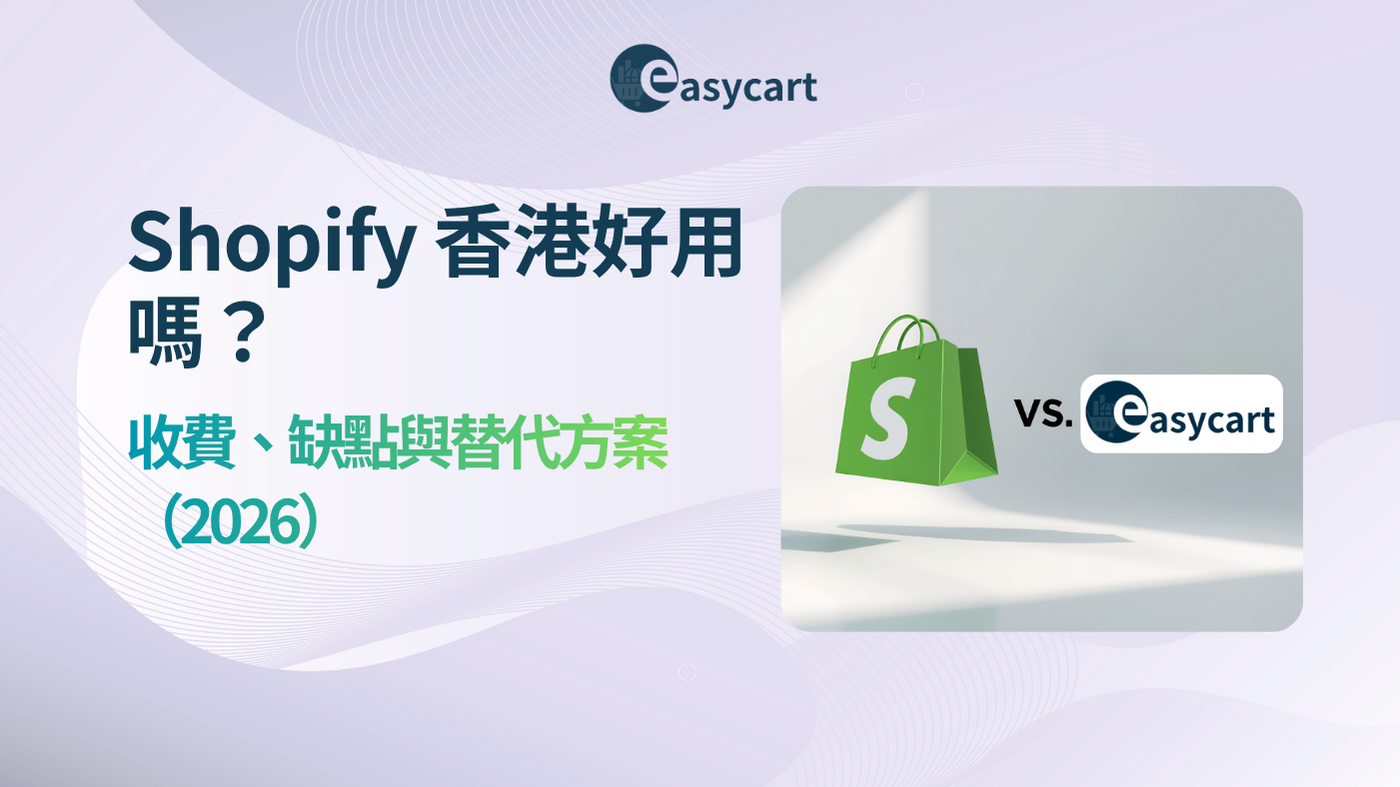
1. The Three Common Order-Taking Methods for Hong Kong Instagram Shops

Method 1: Instagram DM Direct Communication
Suited for: just starting out, few product types, low daily enquiry volume
How it works: Customers see a post, send a DM to enquire, the merchant replies individually, the customer completes a bank transfer, and the merchant confirms with a screenshot before dispatching.

Real limitations: The same questions ("How much?" "Is it in stock?") must be answered repeatedly for different customers. It's difficult to track who has paid and who hasn't. Customers typically enquire multiple times before placing a single order — the time cost is extremely high.
Method 2: WhatsApp Business Orders
Suited for: more product types, need for systematic display, manageable enquiry volume
How it works: A WhatsApp link in the Instagram bio directs customers to a Catalog, where they browse and select products before confirming and completing payment.

Real limitations: Better than pure DM because of the Catalog feature, but still requires manually replying to every customer. Handling 5–10 customers simultaneously increases the chance of errors. No order management system — tracking relies on memory or spreadsheets. Payment still requires manual reconciliation for every transaction.
Method 3: Google Form Orders
Suited for: flash group buys, pre-orders, collecting standardised order information
How it works: A Google Form listing all products is shared via Instagram, and orders are processed through Google Sheets.

Real limitations: Customers cannot see the total price in real time and frequently submit incorrect amounts. Payment is still unresolved — each customer must be chased individually. No inventory management means customers may order out-of-stock items. Some customers distrust the Google Form interface.

2. Why These Three Methods Can't Scale

Many Instagram shop owners assume that slow growth is caused by an inadequate product or insufficient marketing. In reality, when you are still using these three methods, the bottleneck is usually not marketing — it's operations. Here are the four shared limitations:

Bottleneck 1: Time Drain
Answering the same questions repeatedly, reconciling every payment manually, chasing logistics updates — many Hong Kong Instagram shop owners spend 40%–60% of their working hours on this kind of administrative work. That time could have been spent developing new products, creating content, or exploring new sales channels.
Bottleneck 2: Slow Response Time Directly Loses Sales
A customer sees your post on Instagram, becomes interested, sends a DM — but you're busy and reply half an hour later. By then, the customer has scrolled on to the next shop. Research suggests that a response delay of more than 5 minutes can significantly reduce conversion probability. Your product is not the problem — the speed of the sale is.
Bottleneck 3: Zero SEO
Instagram posts, WhatsApp Catalogs, Google Forms — none of these can be indexed by Google. Every month, the brand you have worked to build depends entirely on the Instagram algorithm for survival. When the algorithm changes, organic reach can drop immediately, and there is nothing you can do about it.
Bottleneck 4: No Data — Running the Business Blind
With these three methods, you cannot track: which products are added to interest lists most frequently but never purchased (indicating a pricing or description issue), which channels bring the most customers, what the average order value is, or which customers make repeat purchases. Without data, there is no way to optimise — results depend on guesswork.

3. What Does "Being Able to Scale" Actually Mean?

The real definition of "scaling" is: revenue doubles, but working hours don't have to. The following five criteria can help you assess whether your current approach has reached its ceiling:

Area
Current approach (DM / WhatsApp / Form)
Scalable standard
Order taking
Manual replies to each customer
Customers order independently — no merchant presence required
Payment
Screenshot-based transfer reconciliation
Automatic payment collection and transaction records
Inventory
Memory or spreadsheet
System auto-deducts stock; out-of-stock items unpublished automatically
Data
No records
Best-sellers and high-value customers identified and tracked
Reach
Dependent on the Instagram algorithm
Google search, Instagram, and Facebook — all channels are active

If 3 or more rows fall in the "current approach" column, you have reached a growth ceiling, and it is worth seriously considering an upgrade.

4. When Should an Instagram Shop Upgrade to a Real Online Store?

Upgrading is not something every Instagram shop owner needs to do immediately. The following situations indicate it is worth considering seriously:

1
Daily orders exceed 10–15, and manual handling is becoming difficult to sustain
2
Replying to customer enquiries takes more than 30% of your working time
3
You have experienced missed orders, overselling, or reconciliation errors that affected customer trust
4
You want to run Facebook or Google ads but have no conversion tracking in place
5
You want to accumulate customer data (purchase history, contact details) for long-term marketing

If 3 or more of the above apply, manual order-taking has become your primary barrier to growth.

5. The Upgrade Path: Moving from Instagram Orders to a Real Online Store

Many Instagram shop owners are put off by the idea of building an online store, assuming it requires technical skills or a large budget. The reality in Hong Kong in 2026 is that local SaaS ecommerce platforms have significantly lowered the barrier — no coding required. The main steps are:

Step 1: Choose a template, build the storefront
Most local platforms offer industry-specific templates. No design skills needed — enter your store name and basic details to complete the foundation.
Step 2: Set up payment methods
Enable PayMe, FPS, credit cards, and other local payment methods. Customers complete payment independently — no manual reconciliation needed.
Step 3: List your products
Transfer your existing Instagram product information to the store, set inventory quantities, and the system automatically takes items offline when they sell out.
Step 4: Update your Instagram bio link
Replace the WhatsApp link in your bio with the store link. Continue posting on Instagram to drive traffic — order-taking and payment are handled by the store.

After upgrading, Instagram and WhatsApp are not abandoned — their role changes. From order-taking tools, they become traffic-driving channels. Customers discover you on Instagram, click through to the store, browse products, place an order, and pay — all without the merchant needing to be present.

Most merchants can complete the basic setup and start taking orders within a single day.

6. Real Upgrade Experiences from Hong Kong Brands

Three Hong Kong local brands that moved from Instagram and WhatsApp order-taking to a real online store — and what actually changed:

18Crab
Problem: Hundreds of repetitive WhatsApp enquiries every day during crab season
After launching the online store, all product pricing, specifications, stock status, and delivery options were clearly displayed — customers could order and pay independently. WhatsApp enquiries dropped by 80%. The owner and team could finally focus on product quality and supply chain management rather than answering the same question all day.
Kwong Cheong Loong KCL
Problem: Established heritage brand relying on physical store and phone orders — no online channel
After opening an online store, the first month's online sales fully covered the annual platform fee. For traditional brands with an existing loyal customer base, an online store is a low-risk incremental revenue channel — existing customers reorder online without needing additional advertising spend.
Beatriz da Silva
Problem: Relying on Instagram and WhatsApp orders — no way to track advertising effectiveness
After launching the online store, with built-in SEO settings and a data backend, the team could identify which products had the highest conversion rates and run targeted retargeting. Sales increased by 320% — not because of a larger ad budget, but because ad spend was used more precisely.

What all three cases share: after upgrading, Instagram and WhatsApp were not abandoned. Their role changed from order-taking tools to traffic-driving channels — directing customers into the store to complete transactions systematically.

Conclusion: For an Instagram Shop, Timing the Upgrade Matters More Than How You Do It

Not every Instagram shop owner needs to build an online store right now. If daily orders are low, you are in the early testing phase, or you are mainly validating market response, your current approach is perfectly adequate.

But if you are already feeling the ceiling — orders are growing but your time and energy can't keep up — continuing with the current approach often costs more than the upgrade itself.

Platform Example
EasyCart is a Hong Kong-based local SaaS ecommerce platform designed for SMEs. It natively supports PayMe, FPS, and 10+ local payment methods, provides Cantonese live customer support, and charges a flat HK$488/month with 0% sales commission. It is suited to merchants upgrading from Instagram order-taking to a real online store, and offers a free trial with no credit card required. Whether it genuinely fits your business is best confirmed by testing during the trial period.

Instagram is your traffic channel — it should not also be your order management system.

500+ Hong Kong brands are already using EasyCart

Your store,
starting today.

No credit card required.

Start Free Trial
(About 1 minute to get started)

Free trial · No credit card · Cancel anytime

Frequently Asked Questions

What are the problems with taking orders via WhatsApp for an Instagram shop?
The main problems with WhatsApp order-taking include:

· Manually replying to every customer individually
· No order management system
· No automatic payment collection or inventory updates

Once daily orders exceed 10–15, the cost of manual handling rises sharply and errors such as missed orders or payment reconciliation mistakes become common.
What are the limitations of taking orders via Google Form?
Google Form works for flash group buys or pre-orders, but has several fundamental limitations: customers cannot see the total price in real time, payment still requires chasing each customer individually, there is no inventory management (customers may order out-of-stock items), and some customers distrust the interface. These problems become more pronounced as order volume increases.
When should an Instagram shop upgrade to a real online store?
Consider upgrading when: daily orders exceed 10, replying to enquiries takes more than 30% of your working time, missed orders or reconciliation errors have occurred, you want to run ads but lack conversion tracking, or you want to accumulate customer data for long-term marketing. If 3 or more of these apply, manual order-taking has become your primary barrier to growth.
Is it difficult to upgrade from Instagram order-taking to a real online store?
No. Local Hong Kong SaaS ecommerce platforms have significantly lowered the setup barrier — no technical background is required. The main steps are selecting a template, uploading product listings, and configuring payment and logistics. Most merchants can complete the basic setup within a day. Instagram and WhatsApp can still be used after the upgrade, shifting from order-taking tools to traffic-driving channels.
Is Instagram still useful after upgrading to an online store?
Yes — and it should be. After upgrading, Instagram's role shifts from an order-taking tool to a traffic-driving channel. Continue posting content to attract potential customers, then direct that traffic to the online store to complete transactions. Keeping Instagram's community value while making order processing systematic is the path most merchants follow.

Related Articles

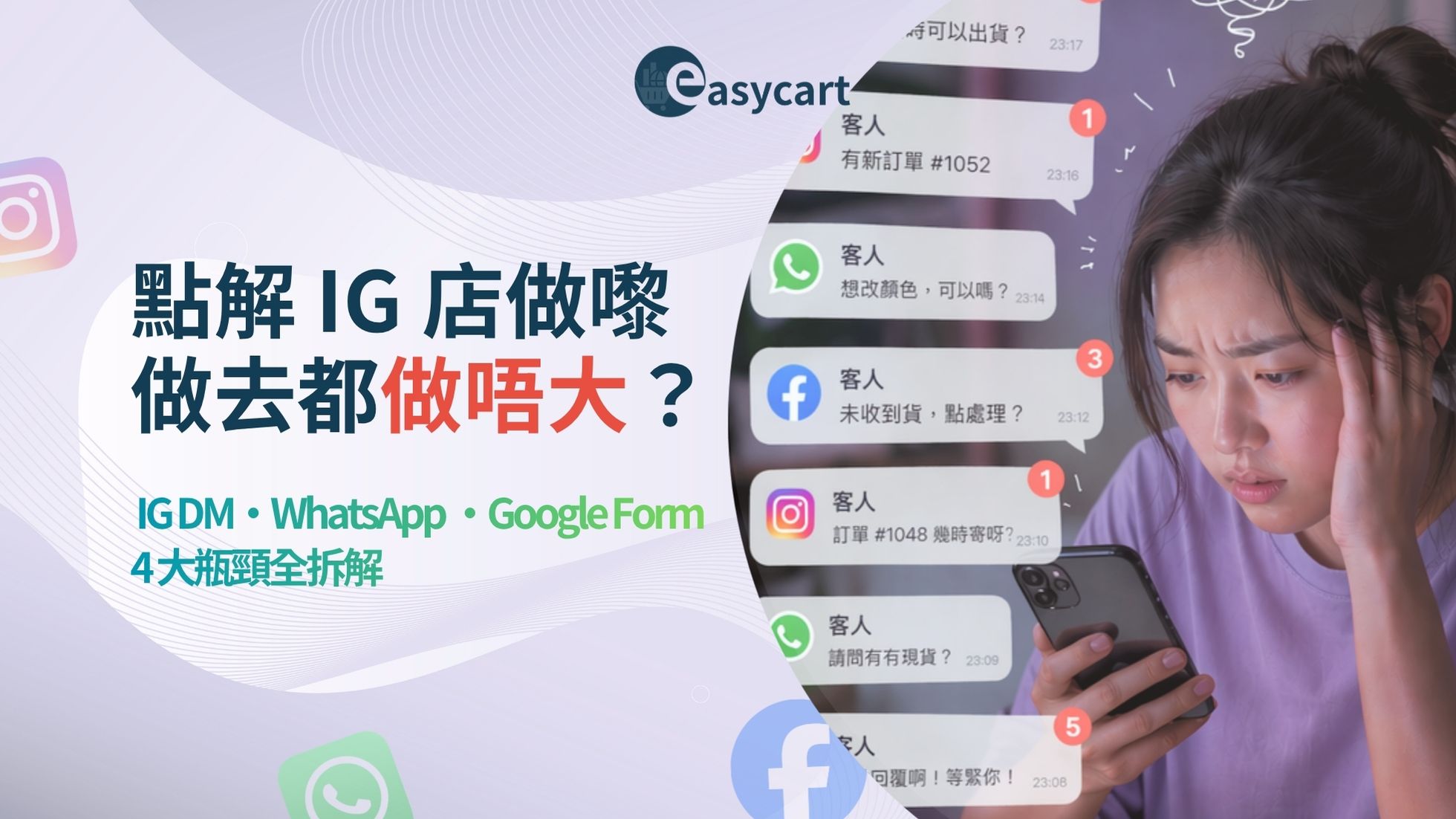
Is Shopify Good in Hong Kong? Pricing, Fees & Alternatives (2026 Review)

2026-04-15

How to Open an Online Store in Hong Kong (2026): 8-Step Beginner Guide

2026-04-15

10 分鐘開網店教學(2026 香港) 零基礎完整步驟

2026-04-06

Your Online Store,

Starts Today

Free trial. No credit card required. Cancel anytime.

Start Free Now

Trusted by HK merchants · Local customer support · No hidden fees