Blog / Start an Online Store / How to Choose an Ecommerce Platform in Hong Kong? A Guide for SMEs (2026)
Start an Online Store

How to Choose an Ecommerce Platform in Hong Kong? A Guide for SMEs (2026)

May 5, 2026
How to Choose an Ecommerce Platform in Hong Kong? A Guide for SMEs (2026)

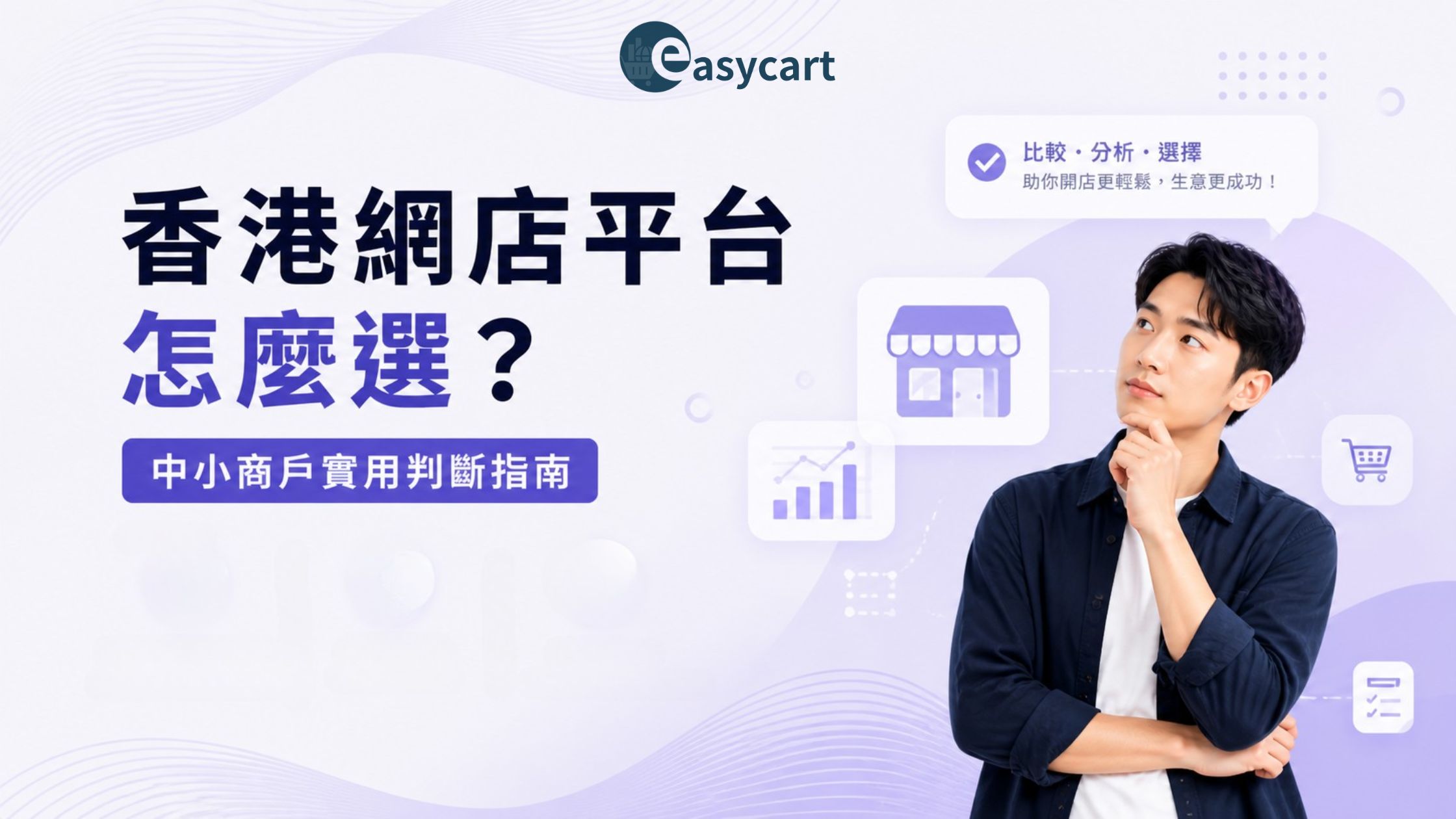
How to Choose an Online Store Platform in Hong Kong? A Practical Guide for SMEs

Before launching an online store, many Hong Kong SME owners face the same first challenge — not choosing products, but choosing a platform. The market is full of options with different pricing structures, feature depths, and technical requirements. Making the wrong choice isn't cheap: migration costs, rebuilding traffic, and retraining staff all add up.

This guide offers a practical evaluation framework to help merchants compare platforms based on their actual business needs — reducing the time and financial cost of switching platforms later.

1. Understand Your Business Model First

Before comparing platform features, merchants should clarify their own business structure. Different operating models require very different things from a platform.

  • Pure online retailers need a platform with a clean interface, smooth checkout, and broad payment method support. The most common issue this type of merchant faces isn't a lack of features — it's discovering that a mainstream payment option isn't supported, causing customers to drop off at checkout.
  • Physical store owners going online need to pay close attention to inventory sync. When online and offline systems operate independently, overselling and missed orders are almost inevitable — and these problems tend to surface all at once during peak season.
  • Social media sellers (such as Instagram Shop or Facebook Page operators) transitioning to an independent store typically need a quick setup and a low learning curve. This group is most prone to overestimating their ability to adapt to complex systems — and end up spending more time on configuration than on selling.

This framework is designed to help you spot the problems that most merchants only discover after they've already gone live.

2. Common Traps in Platform Pricing

Pricing is the factor most often overlooked — and the one that most directly affects profitability. Hong Kong ecommerce platforms generally fall into three pricing categories.

Fixed monthly fee — a set amount each month regardless of sales volume. Costs are predictable and well-suited to merchants with stable or growing revenue, since the platform takes no cut of your earnings.

Revenue commission model — the platform takes a percentage of each transaction, typically 2–5%. It feels low-pressure early on, but as sales grow, actual costs often exceed what a flat monthly fee would have cost — and are much harder to control.

Hybrid model — combines a monthly fee with a transaction commission. Merchants need to calculate their actual cost at different sales volumes to identify which tier works in their favour.

Recommendation: Rather than comparing headline monthly fees, use your projected monthly revenue to calculate total cost across each platform — then compare.

Quick Comparison

Model Structure Best For
Fixed monthly fee Flat rate, predictable cost Higher or stable volume
Commission model 2–5% per transaction Watch hidden costs
Hybrid model Monthly fee + commission Calculate carefully

3. A Practical Feature Checklist

Platform feature lists can be overwhelming, but the ones that truly affect daily operations tend to come down to four areas.

Payment method coverage
Hong Kong consumers commonly use credit cards, PayMe, FPS, AlipayHK, and Apple Pay. If a platform is missing a mainstream payment option, some customers will simply leave at checkout. Verify the actual supported options rather than relying on marketing language.
Product management efficiency
For merchants who frequently update listings or manage large SKU counts, bulk upload and quick-edit capabilities directly affect labour costs. Platforms that require filling in every field manually for each product become a real burden over time.
Mobile management capability
Many Hong Kong merchants need to manage orders on the go. Check whether the merchant app offers full functionality — not just order viewing — during the trial period.
Reporting clarity
Sales data underpins every business decision. If reports are hard to filter, read, or export, they won't actually support day-to-day decision-making.

4. Key Principles When Evaluating Platforms

Beyond features and pricing, the following factors tend to matter more in actual day-to-day use:

Depth of the free trial: Can you fully simulate a real store workflow, or are you just browsing the interface?
Support responsiveness and language: Particularly important for SMEs without an in-house technical team.
Contract terms and exit costs: Can you cancel anytime? Can you export your data in full?
Compatibility with existing tools: Accounting software, WhatsApp Business, ad platforms, and so on.
Relevance of user reviews: Look for feedback from merchants with a similar business size and model — enterprise-level reviews rarely apply to small operators.
Quick self-assessment: where are you stuck right now?
Just starting out, few products, prioritising speed
→ A clean interface, reliable payments, and smooth listing experience matter more than advanced features.
Running both a physical store and an online shop
→ Inventory sync flexibility will directly affect your operational efficiency.
Finding yourself constantly working around platform limitations
→ The issue is often not the workflow itself, but whether the platform architecture can still support where your business is heading.

5. Understanding Your Options

SaaS ecommerce platforms available in Hong Kong vary considerably in design philosophy and pricing logic.

International platforms (such as Shopify) offer comprehensive features and a mature plugin ecosystem, but typically require a higher level of technical setup and are priced in USD — which can make overall costs less manageable for smaller merchants.

Local platforms generally offer better alignment with Hong Kong's payment landscape, language needs, and customer support expectations — but there is significant variation between platforms, so each still warrants individual evaluation.

Platform Type Overview

Platform Type Strengths Watch Out For
International platforms Comprehensive features, extensive plugins Higher technical barrier, USD pricing
Local HK platforms Local payments, language & support Significant variation — evaluate individually
Platform Example
EasyCart is a local Hong Kong SaaS platform designed for SMEs, operating on a 0% sales commission model with support for multiple local payment methods and online-to-offline inventory sync. The backend includes bulk product management, sales analytics, membership tiers, discount codes, WhatsApp marketing, and POS integration. The platform is designed to let merchants adapt and expand at their own pace, rather than requiring a fully configured system from day one. Whether it's the right fit still depends on hands-on testing during the trial period.

When choosing a platform, avoid relying on any single source of information. Select one or two options and run a complete trial workflow before committing.

6. When an Independent Store May Not Be the Right Move Yet

Not every merchant is ready to launch an independent store right now. The following situations may warrant a pause:

Revenue is still low and unstable: If monthly online sales are still in an exploratory phase, the share covered by a fixed monthly fee may be disproportionately high. It may be worth validating demand through existing channels first before committing to a standalone store.
Very limited and unstable product range: The operational overhead of running a full store may outweigh the practical benefit.
Customer base is heavily concentrated in a single closed community: If the majority of your buyers come from one specific group or channel, a standalone store may see limited organic traffic until a broader audience is established.

Conclusion: What's the Next Step After the Framework?

This framework isn't designed to identify the "best" platform. It's designed to help you ask the right questions before deciding. The real answer usually comes from doing.

A number of Hong Kong merchants have seen meaningful results after switching to the right platform:

Month 1
Kwong Cheong Lung KCL
Recovered platform costs within the first month of going live
↓ 80%
18Crab
Manual WhatsApp enquiries dropped significantly after the store took over

Neither found the "best" platform. They found the one that fit how their business actually operates.

During the trial period, run a complete simulation of your real workflow — list products, test checkout, review reports, contact support. One hands-on run is worth more than ten feature comparison sheets.

The right platform isn't the one with the most features. It's the one that doesn't slow you down today — and leaves room for where you're going next.

Trusted by 500+ Hong Kong brands

Your store,
starting today.

EasyCart offers a free trial — no credit card required, cancel anytime.
The lowest-risk way to test a local platform against your real workflow.

Start for Free

Free trial · No credit card · Cancel anytime

Frequently Asked Questions

When should SMEs start seriously comparing ecommerce platforms?
When order volume is growing, your product range is expanding, or you're managing multiple sales channels — that's the right time to proactively assess whether your current platform can still keep up, rather than waiting for problems to surface first.
Does more features mean a better platform?
Not necessarily. For many SMEs, configuration flexibility and the cost of adapting the platform as the business evolves matter more than the total number of features available.
Can I start with a simpler platform and switch later?
Yes — but factor in the real cost of switching: data migration, workflow rebuilding, and SEO impact. If you anticipate a significant change in your business model within the next six months, it's worth evaluating scalability from the outset rather than treating it as an afterthought.
If my sales volume is still low, is using a large international platform overkill?
It depends on how much of the platform you're actually using. Factor in the ongoing monthly fee and the cost of any add-ons or scaling — if a significant portion of the features go unused, the value proposition may not hold up over time.

Related Articles

Shopify 香港好用嗎?收費、缺點與替代方案(2026)

2026-04-15

【2026 香港開網店完全指南】零基礎都識做,8 步開舖全攻略

2026-04-15

零基礎都做到!10 分鐘開網店教學(2026 香港)

2026-04-06

Your Online Store,

Starts Today

Free trial. No credit card required. Cancel anytime.

Start Free Now

Trusted by HK merchants · Local customer support · No hidden fees