
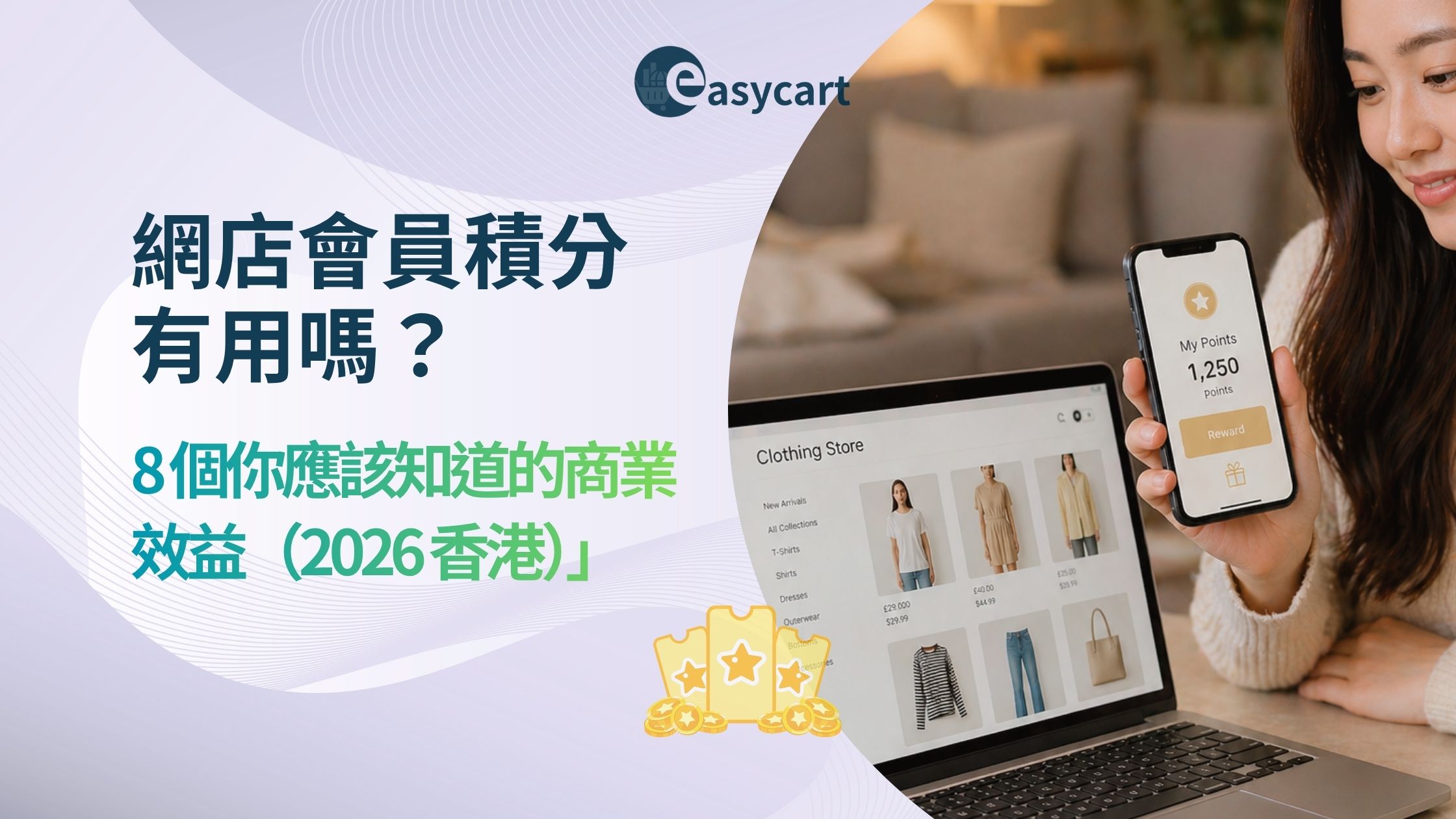
Blog / Online Store marketing growth / The Complete Guide to Loyalty Points Programmes: A Long-Term Growth Engine No Online Retailer Should Ignore
Online Store marketing growth

The Complete Guide to Loyalty Points Programmes: A Long-Term Growth Engine No Online Retailer Should Ignore

Apr 1, 2026
The Complete Guide to Loyalty Points Programmes: A Long-Term Growth Engine No Online Retailer Should Ignore

Introduction: Why Loyalty Points Have Become Standard for Online Businesses?

As the online consumer market grows increasingly saturated, the model of driving sales purely through paid advertising traffic is becoming harder to sustain at acceptable returns. Customer acquisition costs (CAC) continue to climb, and without an effective retention mechanism, even high traffic volumes simply translate into one-off transactions. Against this backdrop, loyalty points programmes—a mature customer retention tool—are being reassessed as a strategic priority by online retailers.

A points programme is not merely a substitute for discounts. It is a systematic framework that integrates behavioural incentives, data collection, brand building and long-term monetisation. This article examines, from an operator's perspective, eight tangible business benefits of loyalty points for online retail, and offers guidance on how to embed a points mechanism within a broader growth strategy.
1. Significantly Improve Repeat Purchase Rate, Turning One-Off Buyers into Long-Term Customers

According to Harvard Business Review, citing landmark research by Bain & Companya 5% increase in customer retention can lift profits by 25% to 95%; and the cost of repeat purchases from existing customers is only one-fifth to one-seventh of acquiring a new one. A loyalty points programme converts purchase behaviour into accumulable rewards, directly stimulating customer return.

When every transaction earns tangible value (points), customers naturally gravitate towards completing their next purchase with the same merchant rather than scattering spend across competitors. This "sunk cost mentality" is the most fundamental behavioural driver of any points system—accumulated but unredeemed points are perceived as a loss, prompting additional orders to recover that value.

Practical Implications for Operators

  • Shorter repurchase cycle: Customers actively plan their next purchase to redeem points before they expire.
  • Reactivation of dormant customers: Points expiry notifications themselves are a high-conversion remarketing trigger.
  • Reduced churn rate: For customers tied to a points balance, the opportunity cost of switching to another platform rises significantly.

2. Increase Customer Lifetime Value (CLV) and Improve Overall ROI Structure

Customer Lifetime Value (CLV) is a core metric for measuring the health of any e-commerce business. Loyalty points lift CLV directly by extending the customer lifecycle and increasing purchase frequency.

A higher CLV allows merchants to absorb a higher cost per acquisition, providing a competitive edge in advertising auctions. In other words, a points programme is not just a retention tool—it is also an amplifier of the entire marketing budget structure.

Research from Bain & Company further indicates that for e-commerce brands with well-designed loyalty programmes, active members spend on average 60% to 90% more annually than non-members. This gap widens further when membership tiers and points multiplier mechanisms are layered on top.

3. Reduce Reliance on Paid Traffic and Optimise Acquisition Cost Structure

In recent years, CPC on platforms such as Meta and Google has continued to climb. Combined with iOS privacy changes and cookie restrictions, tracking and optimising paid traffic has become increasingly difficult. In this environment, the strategic value of owned traffic has risen sharply.

A loyalty points programme is, in essence, a reservoir of owned traffic. Every registered member is an asset that can be re-engaged in the future, and merchants can communicate directly with members through email, push notifications, SMS and other low- or zero-cost channels, bypassing advertising intermediaries entirely.

Low-Cost Marketing Activities Enabled by a Member Pool

  • Double Points Days to stimulate sales during slow periods
  • Birthday points to strengthen emotional connection with the brand
  • Tier upgrade notifications to trigger top-up purchases
  • Points expiry reminders to accelerate inventory turnover

It is worth noting that the execution cost of these activities depends heavily on how tightly the points system is integrated with the rest of the stack. When the points engine is natively connected with order, email and WhatsApp notification modules—as is the case with the built-in membership tier system in EasyCart and its segmented push features—merchants can configure triggers and reward rules in one place, without integrating third-party tools, significantly reducing time-to-launch.

4. Build a First-Party Data Asset to Adapt to the New Privacy Landscape

As privacy regulations such as Apple ATT and GDPR continue to take effect—and with Safari and Firefox already blocking third-party cookies by default—advertisers' ability to rely on cross-site tracking for audience targeting has been substantially eroded. In this environment, first-party data has become one of the most valuable assets in e-commerce. A loyalty points programme inherently requires customers to register and log in, making it a natural and compliant channel for collecting transaction data.

By analysing how members earn and redeem points, merchants can:

  • Identify high-value customers and target them more precisely
  • Predict churn risk and intervene proactively
  • Optimise pricing and promotional strategies
  • Build accurate customer segmentation models

These data assets translate into measurable commercial value across advertising, remarketing, product development and even supply chain planning.

5. Increase Average Order Value (AOV) and Improve Margin Structure

A well-designed points programme is highly effective at encouraging customers to add to their basket to qualify for rewards. Common tactics include redemption thresholds, points-multiplier products and bonus points awarded above a certain spend level.

These mechanisms encourage customers to add items at checkout, lifting average order value (AOV). For an online store, a higher AOV spreads fixed costs—logistics, packaging and payment processing fees—across more revenue, directly improving net margin per order.

6. Build Emotional Connection, Elevating Transactions into Brand Loyalty

In the long run, the greatest value of a points programme is not short-term sales stimulation, but rather the accumulation of emotional capital between the brand and the customer.

When customers invest time accumulating points, achieving tier upgrades and unlocking member-exclusive privileges, the relationship with the brand becomes more than transactional—it becomes a form of identity. This identity is a moat that competitors cannot easily replicate, and the foundation on which a brand can sustain a pricing premium over time.

Research published in Harvard Business Review's "The New Science of Customer Emotions" indicates that customers who are emotionally connected to a brand are 25% to 100% more valuable in lifetime terms than those who are merely satisfied, with significantly higher referral propensity—a form of word-of-mouth growth that no amount of advertising can buy.

7. Create Differentiated Competitive Advantage and Move Beyond Pure Price Competition

In a saturated e-commerce market with highly homogeneous products, competing purely on price only continues to compress margins. A loyalty points programme allows merchants to offer a richer overall value proposition—through a multi-dimensional value mix of points, tiers, exclusive offers and birthday rewards—without resorting to discounting.

This strategy is particularly relevant for small and mid-sized online merchants. When you cannot win on price against large platforms, closer member relationships and more personalized service become the most viable path to long-term customer loyalty.

8. Drive Organic Word-of-Mouth and Activate Referral Growth

A points programme can be combined with a referral reward mechanism to create a low-cost viral growth loop. When members earn points for referring new customers who register or place an order, they actively promote the brand to friends and family, generating high-quality, low-cost new customer traffic.

Because referral traffic carries a higher baseline of trust than paid advertising, these customers typically convert at higher rates and have higher CLV than those acquired through paid channels, further reducing overall CAC.

Key Considerations When Implementing a Loyalty Points Programme

While the benefits of a loyalty points programme are clear, a poorly designed system can erode margins and disappoint customers. When designing a points mechanism, merchants should pay particular attention to the following:

1. Carefully Calibrate the Value of Points

Overly generous rewards compress gross margin; overly stingy ones lose their motivational effect. A common industry practice is to set the rebate rate at 1% to 5% of the order value, with adjustments based on product margin.

2. Set a Reasonable Validity Period

Points should have an expiry mechanism to prevent unlimited accumulation from becoming an open-ended liability. At the same time, the expiry date itself is an important tool for stimulating repeat purchases. A validity window of 12 to 24 months is a common compromise.

3. Keep Redemption Thresholds and Methods Clear

Complex redemption rules reduce member participation. A good points programme allows customers to understand at a glance: "how much I earn, how much I spend, and how I redeem".

4. Mind the Accounting and Tax Implications

Loyalty points are treated as deferred revenue or a liability for accounting purposes. Merchants should ensure their system records issuance, redemption and expiry data accurately, in order to meet audit and tax requirements.

5. Cross-Channel Consistency

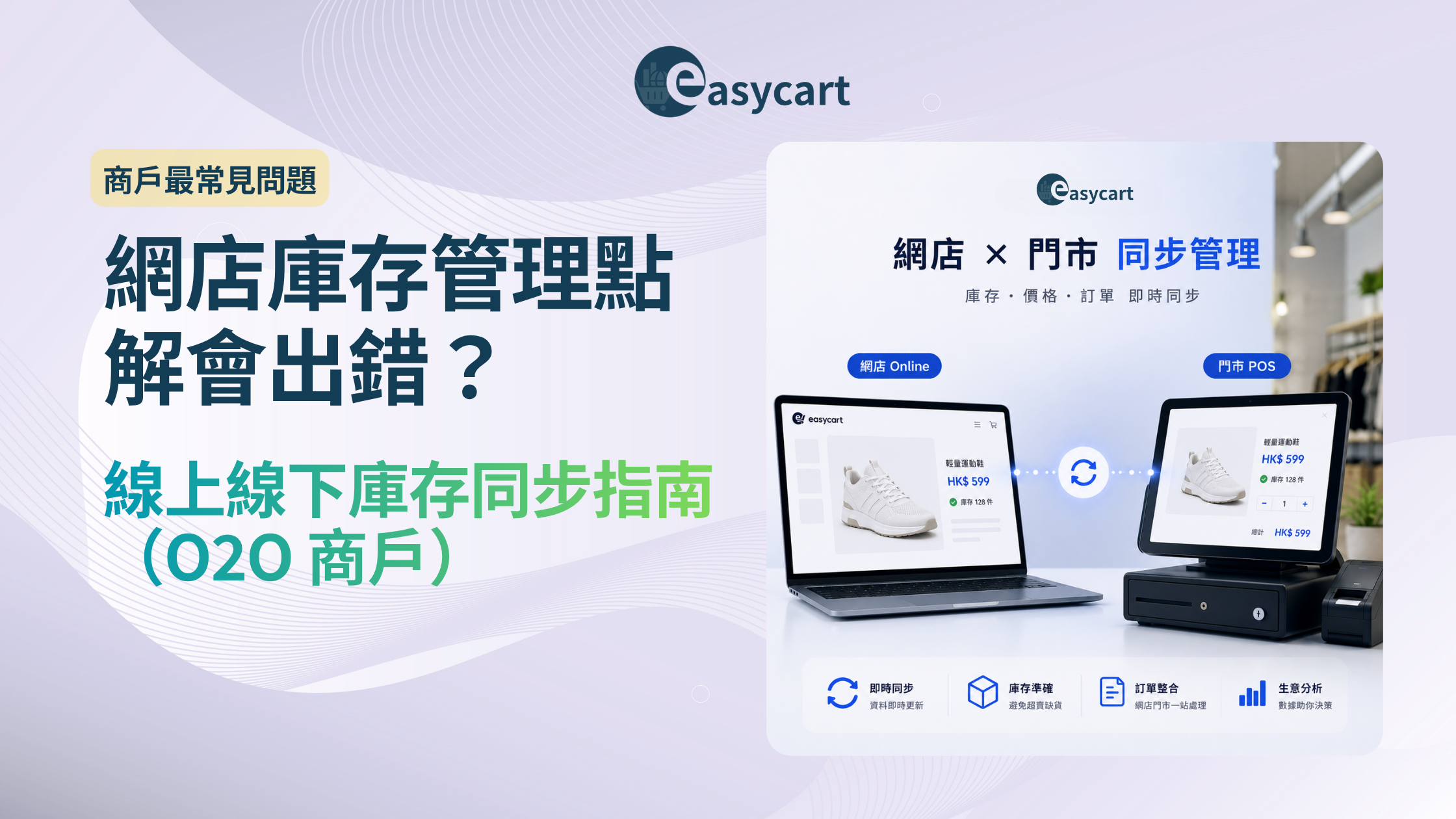
For merchants operating across an online store, physical retail and POS systems, the points programme should be unified across channels to deliver a consistent customer experience. EasyCart, for example, syncs its POS and online store inventory in real time, so members accumulate points to a single account regardless of whether they shop in store or online—eliminating the common problem of fragmented member records between offline and online.

Conclusion: A Loyalty Points Programme Is a Growth Strategy, Not Just a Feature

For any online retailer serious about building a sustainable business, a loyalty points programme should not be treated as a standalone feature, but as a core component of the overall growth strategy. It improves acquisition cost, lifts repeat purchase rate, builds brand equity and strengthens first-party data capability simultaneously—making it one of the few tools that influences several key business metrics at once.

As advertising returns diminish and consumer attention becomes ever more fragmented, a thoughtfully designed loyalty points programme may well be the watershed that allows your online store to stand out and achieve sustainable growth.

It is worth noting that leading SaaS e-commerce platforms in Hong Kong have progressively integrated tiered membership and points programmes as built-in features. All-in-one solutions such as EasyCart allow merchants to activate the mechanisms described in this article without any additional development or third-party integration—for retailers who have yet to launch a member programme, choosing a platform with native support is often the most direct way to lower implementation barriers and accelerate time to value.

Frequently Asked Questions

Is it worth implementing a loyalty points programme for small and mid-sized online stores?
Yes. In fact, smaller merchants have an even greater need for loyal customers to spread their acquisition costs. Even with a modest member base, a points programme can significantly lift average spend per customer and repeat purchase frequency.
Will a points programme erode profit margins?
If the rebate rate is set reasonably (typically 1%–5%), the incremental repeat purchases and AOV uplift it generates usually far outweigh the cost of the points themselves. The key is to treat points as a marketing investment rather than a straight discount.
Can a points programme coexist with coupons?
Yes, but the stacking rules must be clearly designed. A common approach is to apply coupons first and points afterwards, preventing combined discounts from cutting through cost price.
How do you measure the effectiveness of a loyalty points programme?
Key metrics include: member repeat purchase rate, member average order value, member CLV, redemption rate (points redeemed versus points issued), and member churn rate. A healthy redemption rate typically sits between 20% and 40%.
Will points expiry upset customers?
If a merchant has a clear expiry notification mechanism and reminds members in advance, most customers will accept it as a reasonable rule. The key is transparent communication.

Your Online Store,

Starts Today

Free trial. No credit card required. Cancel anytime.

Start Free Now

Trusted by HK merchants · Local customer support · No hidden fees

Demo Store